NEWS
ABOUT US
Hiroshima University
Hiroshima University was established in Hiroshima, the site where the world’s first atomic bomb was dropped, and is one of Japan’s leading comprehensive research universities. The University comprises 12 undergraduate schools, four graduate schools, and one research institute, as well as 11 affiliated schools, a university hospital, and other facilities.
Through world-leading cutting-edge research, Hiroshima University is committed to the development of highly skilled human resources and to contributing to the advancement of society and the international community. Its activities in research, education, and international exchange have been highly evaluated both domestically and internationally. The University has been selected for numerous large-scale competitive funding programs by the Japanese government, including the Top Global University Project (2014–2022), the World Premier International Research Center Initiative (WPI) (from 2022), and the Program for Forming Japan’s Core Research Universities (J-PEAKS) (from 2023). In the Times Higher Education Impact Rankings 2025, Hiroshima University was ranked second in Japan.
In particular, the University places strong emphasis on internationalization and the expansion of global education and research networks. It operates more than 20 overseas bases in 14 countries and regions and has established partnerships with over 400 universities and institutions worldwide.
University Presidents for Peace Conference
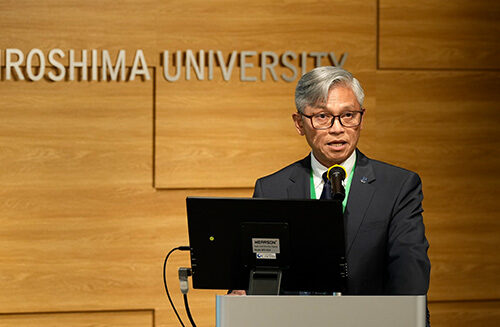
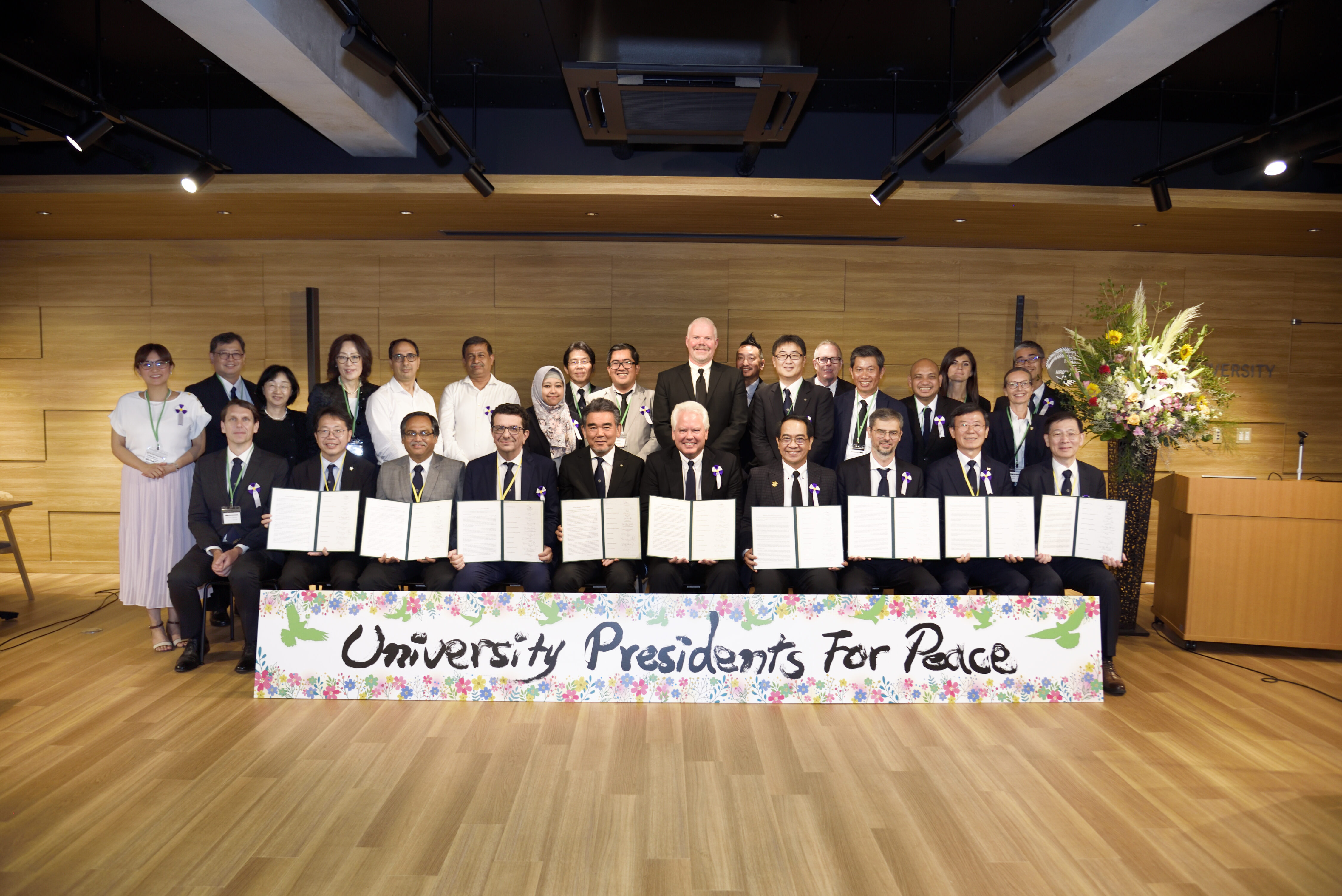
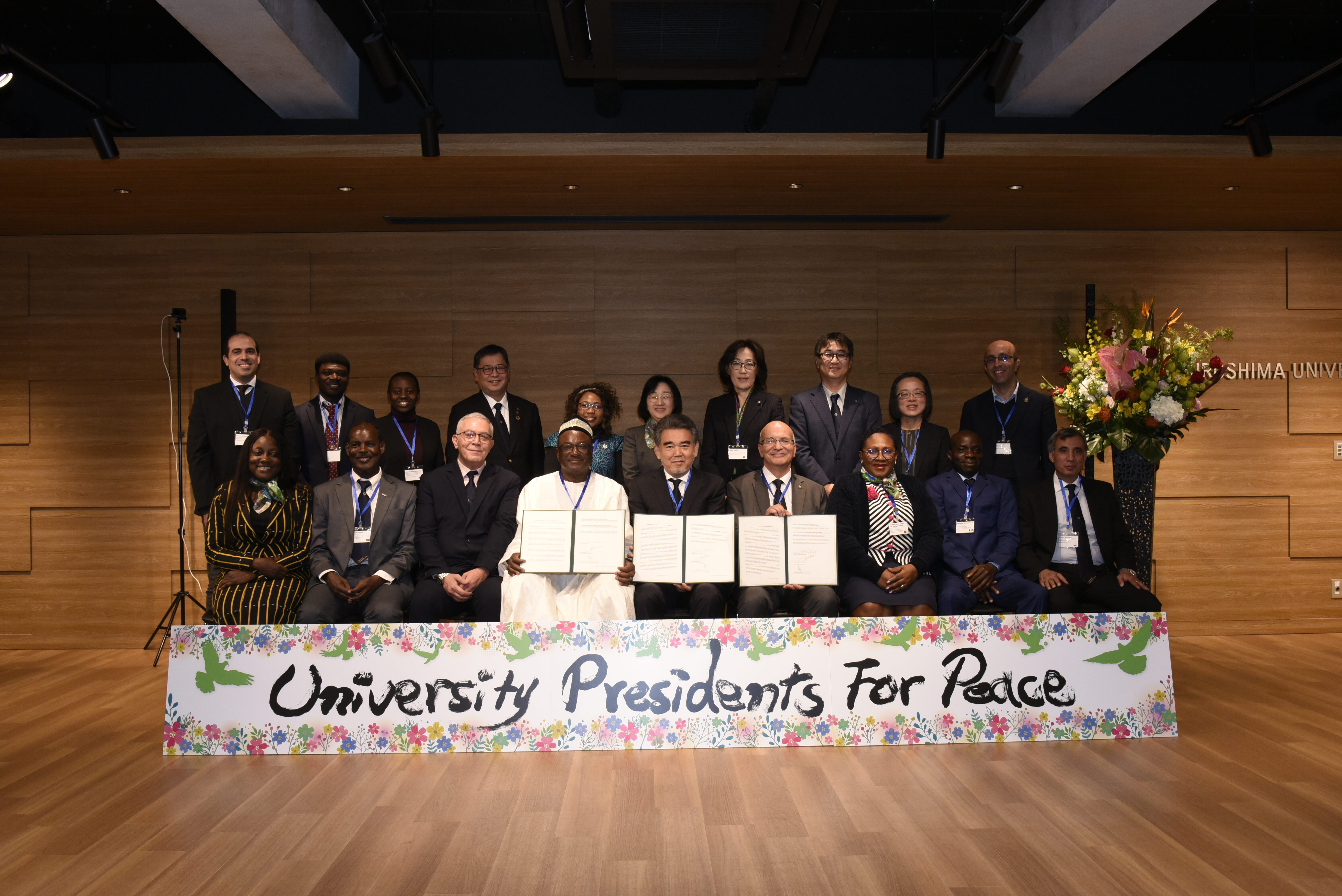
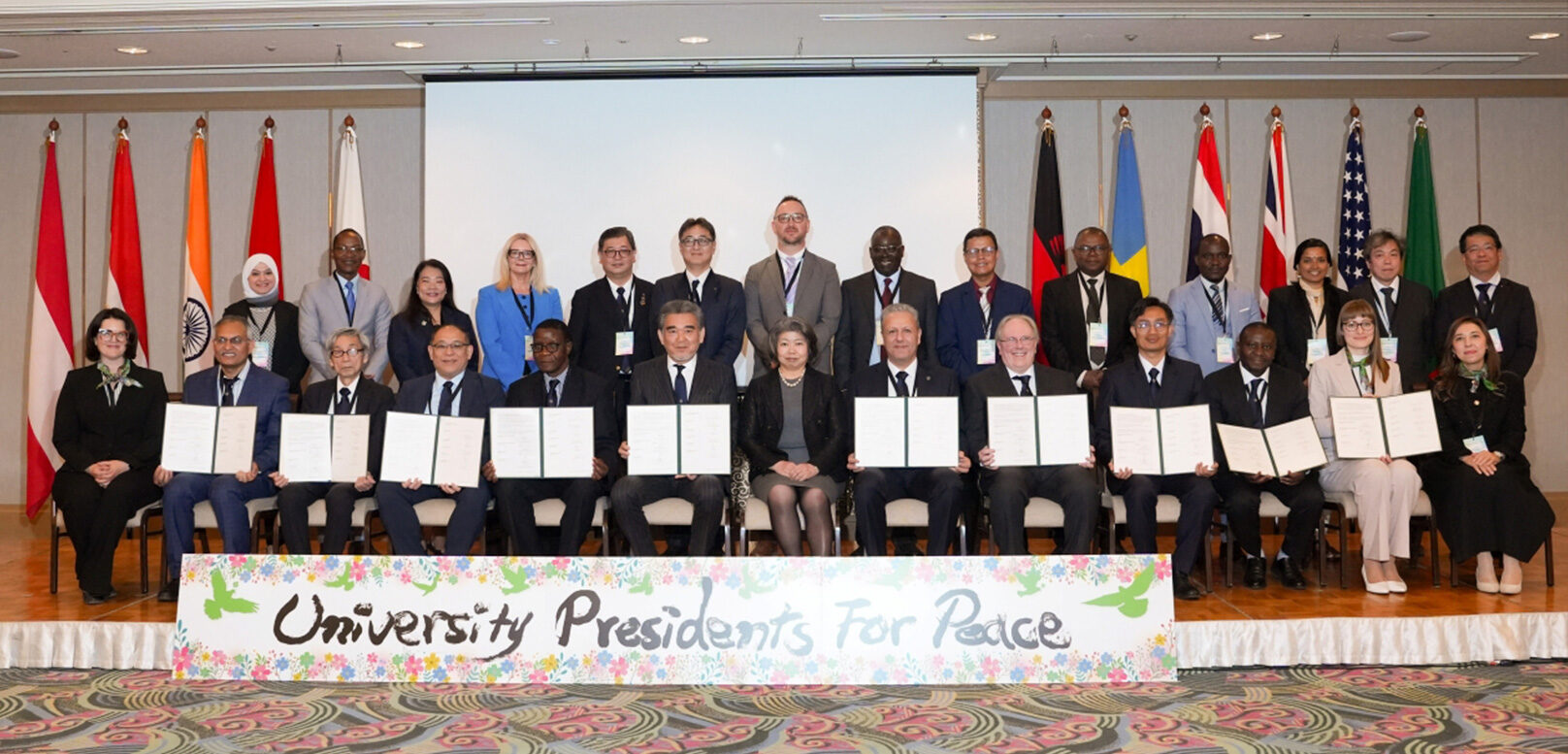
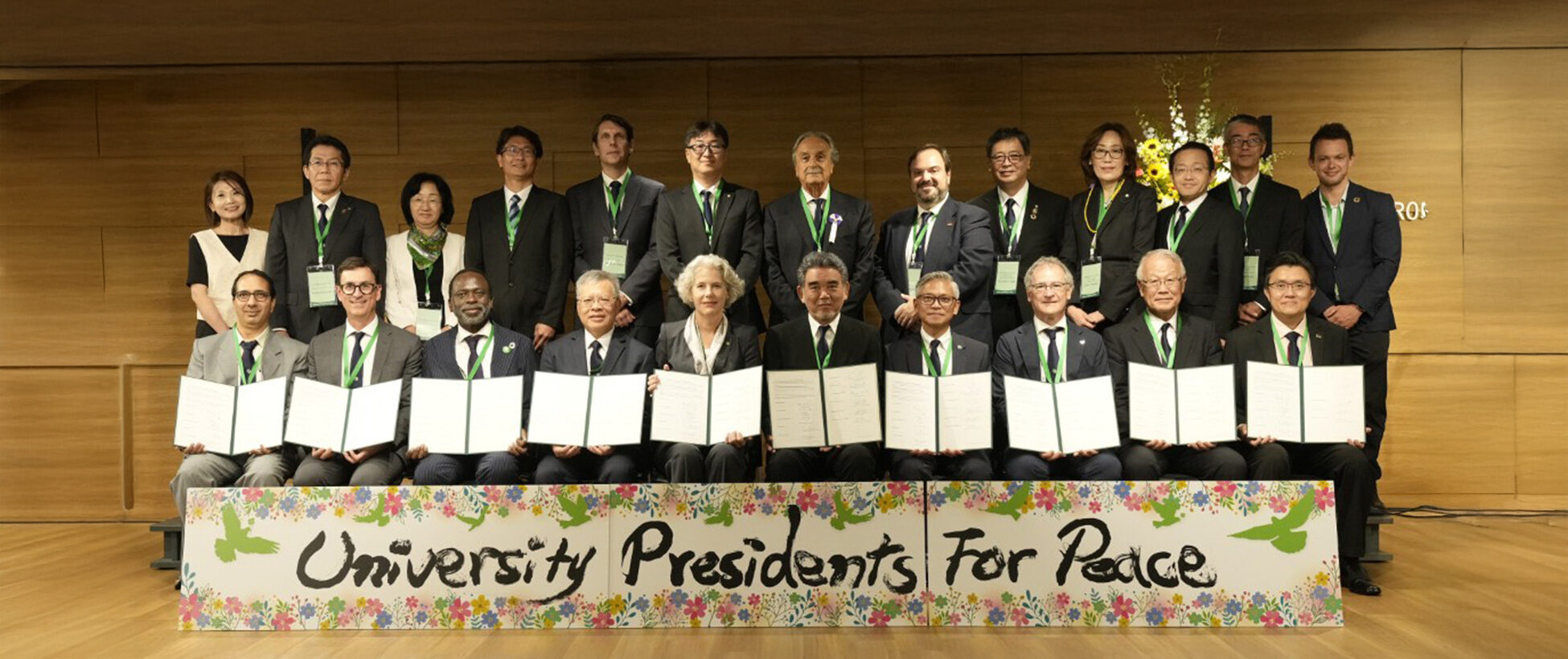
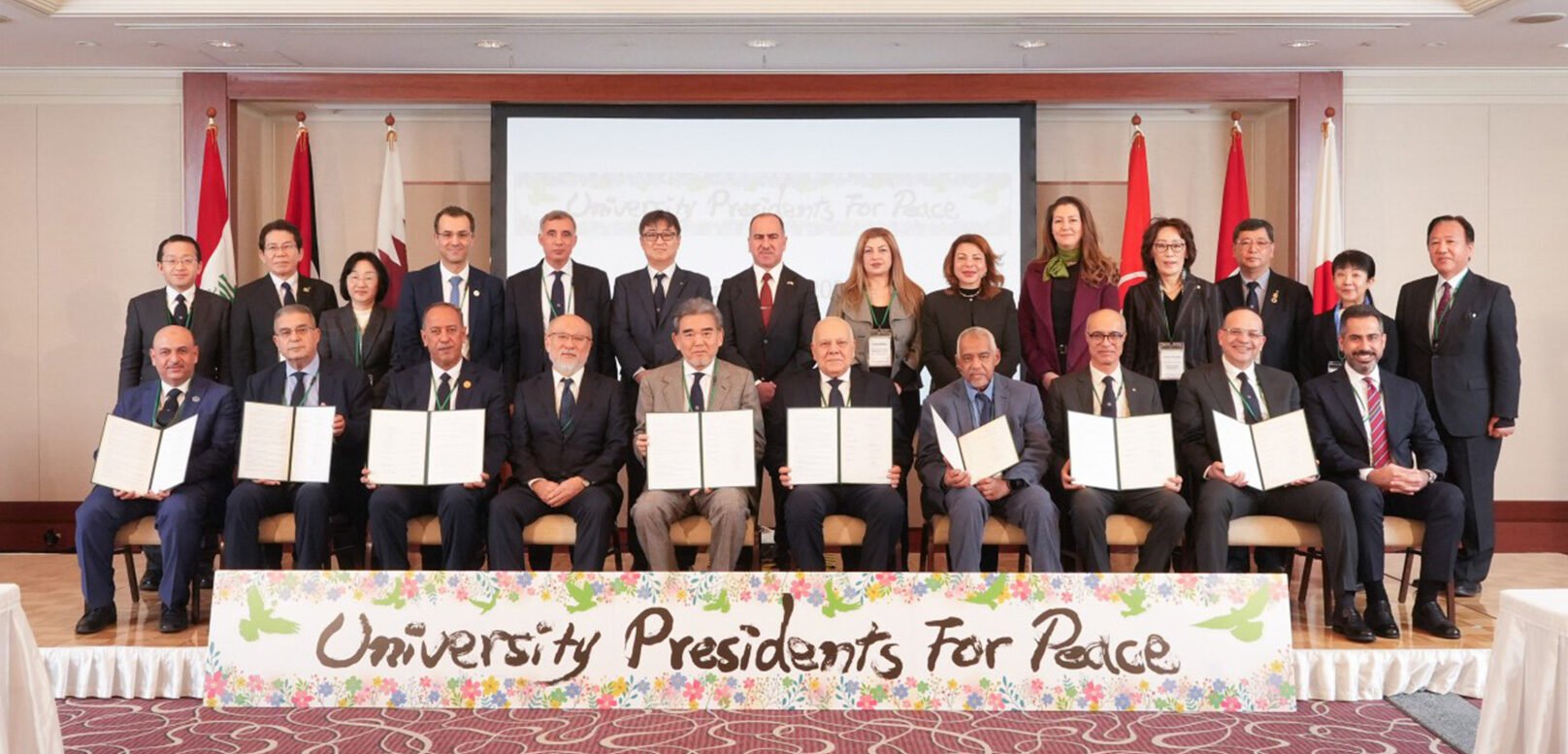
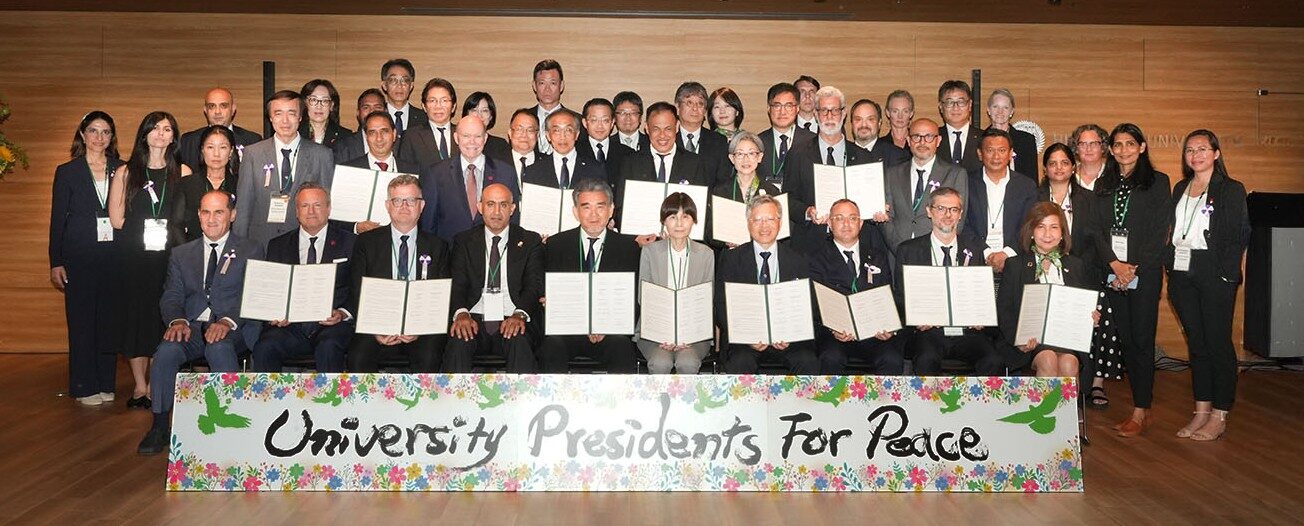
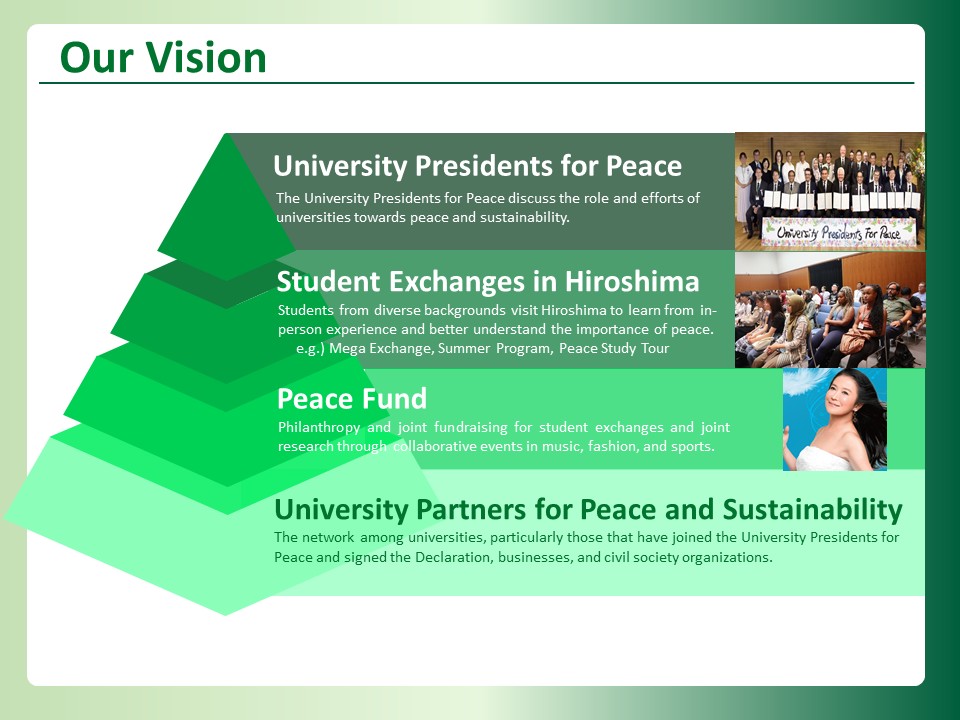
The University Presidents for Peace Conference is an international conference convened by Hiroshima University, calling upon universities around the world to promote inter-university dialogue and collaboration toward the realization of a peaceful and sustainable society. The conference was held for the first time on August 6, 2024, serving as a platform for in-depth discussions on the roles universities can play in society and on approaches to cross-border cooperation.
As a key outcome of the conference, the University Presidents for Peace Declaration, which sets forth concrete principles and actions for future collaboration, was adopted. The conference aims to mobilize the collective strengths of universities in education, research, and social engagement to contribute to the resolution of global challenges and the advancement of world peace.
In particular, the conference places strong emphasis on nurturing the next generation of leaders capable of building peaceful and sustainable societies, as well as on promoting international exchange and cooperation, thereby fostering sustained and effective inter-university collaboration.
Our Vision
Participants Institutions
North America
Canada
-

Conrad Grebel University College at University of Waterloo

United States
-
Arizona State University
-
Columbia University
-
University of Idaho



Asia
Philippines
-
Visayas State University

Republic of Korea
-
Yonsei University

India
-
Birla Institute of Technology and Science, Pilani
-
Indian Institute of Technology Bombay


Indonesia
-
Hasanuddin University
-
Indonesia University of Education


Japan
-
Hiroshima University
-
Nagoya University
-
Institute of Science Tokyo
-
The University of Tokyo
-
Hiroshima City University
-
Fukushima Medical University
-
United Nations University







Marasia
-
Tunku Abdul Rahman University (UTAR)

Taiwan
-
National Central University
-
National Cheng Kung University


Thailand
-
Kasetsart University

Africa
Algeria
-
University of Tlemcen

Cameroon
-
Pan African University

Egypt
-
The Ministry of Education and Technical Education of the Arab Republic of Egypt
-
Cairo University
-
Egypt-Japan University of Science and Technology (E-JUST)



Malawi
-
University of Malawi

Tunisia
-
University of Tunis El Manar

Zambia
-
University of Zambia

Europe
Austria
-
University of Graz

Germany
-
Leipzig University

Italy
-
University of Perugia
-
University for Foreigners of Perugia
-
University of Pavia



Spain
-
University of the Basque Country

Sweden
-
World Maritime University

United Kingdom
-
University of Sheffield

Middle East
Iraq
-
The Sardar Group
-
The American University of Iraq, Baghdad
-
University of Anbar
-
University of Baghdad




Jordan
-
The Association of Arab Universities
-
University of Jordan


Qutar
-
Doha Institute for Graduate Studies

United Arab Emirates
-
Abu Dhabi University